.jpg)
Global Diversity Awareness Month: Inclusion Is Not an Add-On to Mental Health Care

MEDIA RELEASE
For Immediate Release
1 October 2026
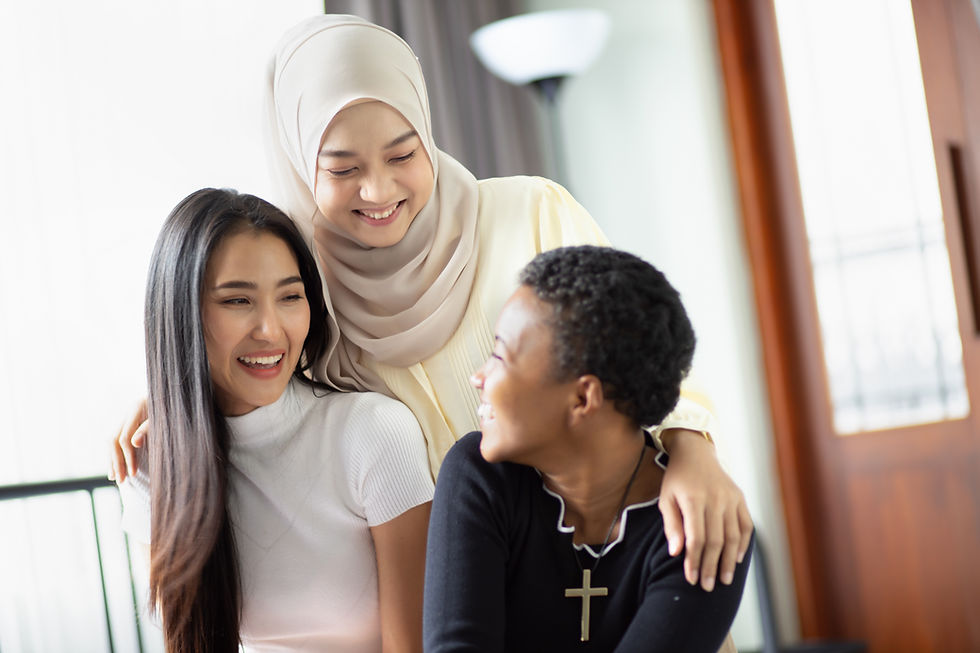
AAMHP calls for diversity, cultural responsiveness and inclusion to be embedded in everyday mental-health practice
The Australian Association of Mental Health Practitioners (AAMHP) is marking Global Diversity Awareness Month this October by calling for mental-health services, workplaces and practitioners to move beyond simply celebrating difference and ensure inclusion is reflected in the way people are actually understood and supported.
Australia is one of the world’s most culturally diverse nations. In 2025, 8.8 million Australian residents, 32 per cent of the population, were born overseas, with India, England, China and New Zealand among the largest overseas-born communities.
But diversity extends well beyond country of birth.
It includes culture, language, ancestry, faith, disability, age, gender, sexuality, family structures, socioeconomic circumstances, migration experience, neurodiversity and lived experience.
AAMHP Chair Shane Warren said good mental-health practice requires practitioners to understand that people do not leave those parts of themselves at the consulting-room door.
“Mental health never exists outside context. The way we understand distress, family, relationships, identity, help-seeking and even what it means to be ‘well’ is influenced by culture, language, community and lived experience.” [Shane Warren]
“Diversity should not be something we acknowledge once a year and then return to business as usual. It should change the questions we ask, the assumptions we challenge and the way we design care.” [Shane Warren]
The Australian Institute of Health and Welfare notes that some culturally and linguistically diverse Australians experience additional barriers when navigating health and welfare systems, including language differences, health-literacy challenges and difficulty understanding unfamiliar service systems. These factors can contribute to poorer access and outcomes when services are not designed responsively.
AAMHP Secretary Susan Sandy said inclusion must move beyond good intentions.
“We can have a service that describes itself as welcoming and still require the person entering it to do all of the adapting. Genuine inclusion asks whether our information is understandable, whether people can communicate in ways that work for them, whether practitioners recognise cultural differences and whether somebody feels safe enough to tell us when we have misunderstood.” [Susan Snady]
“Cultural responsiveness begins with humility. We do not have to know everything about every culture, but we do need to be curious enough not to assume that our own experience is the universal one.” [Susan Sandy]
AAMHP says diversity also matters within the mental-health workforce itself.
A workforce drawing on different cultural backgrounds, professional pathways, languages, communities and lived experiences can strengthen the range of perspectives available within services, provided those practitioners are appropriately trained, supported and working within clear scopes of practice.
Shane Warren said diversity should not mean lowering professional standards.
“The goal is not diversity instead of competence. It is competence that includes the capacity to work thoughtfully with human difference. A technically skilled practitioner who cannot recognise their own assumptions may still struggle to understand the person sitting in front of them.” [Shane Warren]
The National Mental Health Commission identifies stigma and discrimination as continuing barriers to participation, connection and help-seeking. Its 2026 National Stigma and Discrimination Report Card found that around 70 per cent of people surveyed who were living with mental-health challenges had experienced discrimination in at least one area of life.
For AAMHP, Global Diversity Awareness Month is therefore not simply an invitation to celebrate multicultural food, festivals or visible difference.
It is an opportunity for practitioners and organisations to ask practical questions:
Are our services accessible to people who communicate differently?
Do our forms and language assume a particular type of family?
Do we make assumptions about relationships, gender, sexuality, faith or culture?
Do clients see themselves reflected in our workforce and resources?
And when somebody understands the world differently from us, are we curious, or do we immediately treat difference as something requiring correction?
AAMHP encourages mental-health practitioners, organisations and workplaces to use October to examine how diversity is reflected in recruitment, supervision, service design, communication, professional development and everyday interactions.
Diversity describes who is in the room. Inclusion is what determines whether they are able to belong there.
Media Contact:
Shane Warren, Chair
Susan Sandy, Secretary
Philip Armstrong, CEO


Comments